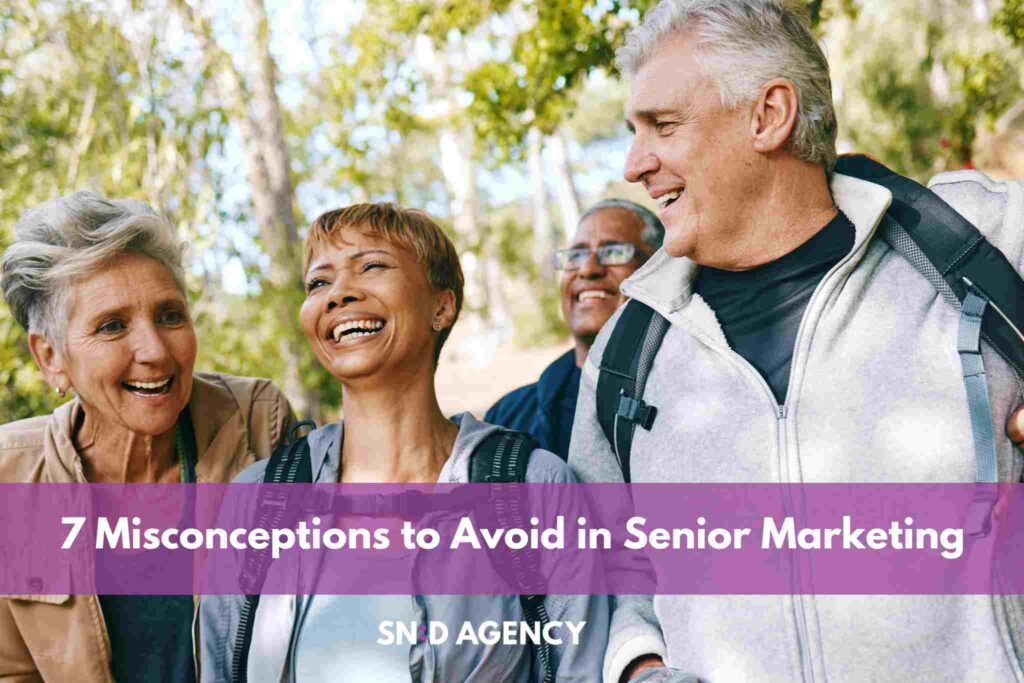
When you hear the words “senior marketing,” what comes to mind? Whether you are aware of it or not, the answer may be something stereotypical, limiting, or even potentially harmful and brand-damaging. There are several misconceptions about seniors that can jeopardize your brand’s marketing efforts if you’re not careful.
At SN:D Agency, we have over a decade of experience working with brands in their senior marketing , and we’ve kept up with the trends of what works and what needs to go. Today we’re debunking seven common myths to help your business do it right.
Misconception #1: Senior Marketing Is All About “Old” People
For some, the word “senior” may conjure up an image of a feeble “old person” who is unable to take care of themself or make their own choices. The truth is, the aging market starts with people as young as 50. While it’s true that senior marketing can be focused on products and services for much older consumers (and there are plenty of those), it’s important to recognize that there are many other facets to this demographic that don’t have anything to do with retirement age. Senior marketing is not just about healthcare, assisted living, or end-of-life care. Don’t miss out on a huge portion of the aging market by catering all your marketing to people who fit these stereotypes of “senior.”
Misconception #2: Seniors Are Not Tech-Savvy (And Don’t Want to Be)
The second misconception is that seniors are uncomfortable with or averse to technology. This leads to the assumption that seniors won’t see your ads on Facebook or elsewhere online. This is simply not true; seniors are very active online. They have had technology as a part of their everyday lives since the 1970s (50 years ago) and the internet since the 1990s (nearly 30 years ago), meaning tech and the internet are not new or foreign to seniors. Seniors do use the internet, social media, and mobile devices, so don’t make the mistake of overlooking digital ads in your senior marketing. You may just need to adjust the way you reach them online.
For more tips on reaching your senior audience online, read our blog post: 23 Tips for Marketing to Seniors in 2023
Misconception #3: “Senior-Friendly” Means Boring and Outdated
This is a common misconception, and it’s easy to see why. Seniors are often portrayed as stuck in their ways–and while some of them may be, many of today’s seniors are all about new experiences, products, and services that can help them live life more fully.
Seniors are not all afraid of change; they may just prioritize making changes that will improve their lives in some way. Like people of any age, older consumers are often eager for new technology that makes life easier or more enjoyable: smartphones with GPS capabilities so they never get lost again, online shopping services like Amazon Prime Now so they can order groceries from their favorite stores without having to leave home, even social media sites such as Facebook where people can keep up with family members around the world. Connection and convenience may be more important to your senior audience than you expect, so be careful not to play into this stereotype in your brand’s senior marketing.
Misconception #4: Aging Equals Decline
The fourth misconception is that aging is all about decline, that seniors are not interested in being healthy and fit, or that they are content to “let themselves go” as they age. The truth is that more and more seniors today are what we call “active agers” – meaning they are interested in staying active, retiring later, extending their quality of life, and having new experiences in the second half of life. You should focus on your older customers’ needs by providing them with products or services that help them feel good about themselves and showcase seniors living their lives to the fullest in your brand’s marketing messaging and imagery.
In fact, buying into the stereotype and portraying older people as stagnant or declining in your marketing could have the opposite effect from what you want. People tend to see themselves as 10 years younger than they actually are, and advertising that displays life as they want to live it (even if it isn’t exactly how they are living it now) may be more appealing to seniors.
Misconception #5: Seniors Are Simple
One sure-fire way to do more harm than good in your senior marketing is assuming that your messaging needs to be over-simplified to reach older adults. The truth is, seniors making their own purchasing decisions are smart, sophisticated adults and are able to keep up with changes and advancements. They don’t need content simplified for them; instead, they want content that is relevant to their lives as they age. To put it simply: see your senior audience as the capable adults that they are. If you view older adults as simple, even subconsciously, it will show in your senior marketing efforts, and could do damage to your brand.
Misconception #6: Seniors Hate Change
The sixth misconception is that seniors are resistant to change and don’t like new products or services. Our experience proves otherwise. While many older consumers have a strong connection to the past, many who are in the active aging demographic also have an appreciation for the present and future.
They want their lives to stay current and relevant. In fact, many seniors see themselves as pioneers–they are willing to try new things first because they want others who come after them not only to enjoy but also to benefit from what they’ve learned over time. Don’t be afraid to test messaging or imagery that promotes what is new and different in your business’s senior marketing.
Misconception #7: Seniors Fit Into a One-Size-Fits-All Solution
The last and overarching misconception to avoid is lumping all seniors into one marketing approach. The 50+ population is huge and is made up of people of all different ages, backgrounds, personalities, goals, needs, and life stages. Do not make the mistake of treating your audience of older consumers as though they are all the same.
They may have different values and attitudes toward technology, communication, and brands than younger consumers do, but they also may vary within the senior market itself. These differences should be respected by marketers who want to reach this lucrative audience. Look at it this way–these differences provide a wide variety of opportunities for testing in your marketing messaging. By opening your mind to the diversity present among the aging population, you’ll help your business reach an even broader audience of seniors with success.
The aging population is growing rapidly and will continue to do so in the coming years. It only makes sense for businesses to take advantage of this opportunity by creating marketing strategies that target seniors specifically–especially if they want their brand name to become synonymous with quality products or services that people trust over time. By working with an established agency like SN:D that specializes in senior marketing, your business can rest at ease knowing that we will help you avoid brand-damaging blunders like the misconceptions mentioned above.
To learn more about our expertise and what we can do for your brand, contact us for a free consultation here!